
Parents and teachers in New Zealand have been raising concerns about the way that boys treat young women. A recent RNZ article reported that a young teenage girl felt compelled to change schools because of the aggressively sexist behaviour some boys displayed. The media reports that much of this is traced back to online content from the so-called “manosphere”—“an echo chamber where young men hang out and where their insecurities are fed on by some of the most vile men on the internet.”
Manosphere or not, poor treatment of women by men isn’t a rare or new thing. But our expectation of respect for women is at least in part a legacy of Christianity. Mutual respect isn’t something women have been able to take for granted in the past, and it isn’t something we can always take for granted today.
For parents of young women and young men, this is an important issue. Sexism exists. We would rather it didn’t. What today might compel men to respect women, and on what grounds might women request it?
A Beautiful Queen and a Boorish Husband
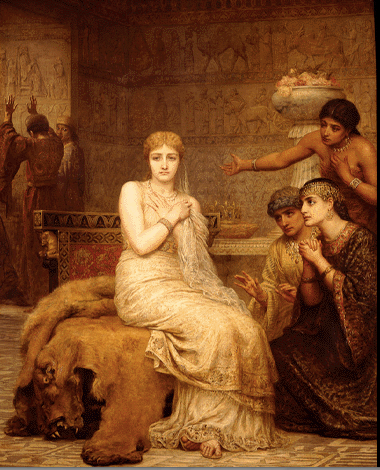
I recently shared the story of Queen Vashti with one of my daughters. Vashti was an ancient Persian queen who appears in the Bible (in the book of Esther, chapter 1).
Vashti is famous for her refusal to present herself to the king—her husband—at a banquet.
In the story, the king had been “merry with wine” and wanted to show off her beauty to the nobles and the other men at his banquet. So he commanded that she dress up and present herself, so that all these men could take a look at her.
Vashti said no, and she refused to come.
For this disobedience, Vashti is deposed as his queen. Ultimately she is replaced by Esther, who has her own story.
WhO was in the Right? Says Who?
My daughter sided with Vashti. I prodded her with the question of whether Vashti maybe should have done as she was told.
She was a little puzzled.
On second thoughts she wondered which Bible character in the story was in the right—after all, neither of them were obvious “baddies”, and kings are meant to be obeyed rather than humiliated, right? Maybe Vashti should have done what she was told, she wondered.
Setting aside the rights and wrongs of the domestic dispute between this Persian royal couple, this story provided the opportunity to answer a slightly different question:
why DON’T we endorse the behavior shown by the king?
After all, through most times in history, and in many cultures today, people would support the king in his rebuke of his disobedient and embarrassing wife.
To take this to the extreme, many cultures throughout history and still today support the human trafficking of vulnerable young women into slavery and exploitation
But we tend to be different. In countries like New Zealand, we very easily side with Vashti against her boorish and powerful husband , and are completely against human trafficing and exploitation..
what has made OUR culture different?
The Social Impact of a Biblical Heritage
There were two verses from the Bible that I shared in our brief talk while doing the after-dinner dishes. These verses, I explained, have had a large impact on the way our culture thinks about how men and women should treat each other.
One was Genesis 1:26–28, which teaches that every human is made as reflecting and representing God. Every human therefore has dignity and value. This is reason to be humble rather than proud with each other, and for treating others with respect regardless of race or class or ability or gender.
The second verse I told her about was Ephesians 5:25, where husbands are instructed to love their wives just as Christ loved the church and sacrificially gave himself up for her. The self-sacrifice of Jesus is given as the model for husbands to follow after.
Biblical texts like these have shaped western culture. Even as western culture sheds its Christian heritage, it is the legacy of texts like these that causes so many people (even those without Christian faith) not to tolerate the kind of attitude that the king displayed toward his wife.
Moreover, our culture widely disapproves of degrading treatment of women in general, even if it happens more than we would like. (One such example was the story recounted by a young Auckland waitress in this 2023 New Zealand Herald article—sorry it’s paywalled).
This expectation is a result of the Christian heritage of countries like New Zealand. If respect for women is a “fruit”, the teaching of equality between the sexes from the Bible is the tree with its roots.
Our current western culture values the fruits of this but has done away with the roots that nourish it. Perhaps it is time we replanted the tree.
Where does our Morality come from?
Forget the question of whether Vashti should have done as she was told. It is a better question to ask whether the King should have treated his wife as he did—and to ask the question of why most people today think he should not have.
Among people who follow Jesus and want to honour God in their living, biblical texts like these are reasons which ought to compel as well as inspire men to treat women better than might be seen in the society around them.
Although many people will demand respect for women for reasons other than those given in Christian teaching, these are the reasons why God-honouring Christians don’t treat our wives as this Persian king treated his.
To read more along the same theme as this post, see Rebecca McLaughlin’s essay “Your Moral Code Has Christian Roots Whether You Know It or Not“, HERE.
“Take Another Look” is a West Auckland-based ministry that aims to commend Jesus to people’s hearts and minds, and promote the way of life that the good news of Jesus invites us into. If you would like to discover the widely-held beliefs and practices and aspirations for good-character among Christians, please visit and explore www.TakeAnotherLook.nz. Or, if you have questions you would like discussed, please get in touch through the contact page.
Explore







 Take Another Look
Leave a comment