
“Evangelical” Christianity is among the most well-known kinds of Christian faith, but what the term means is not so well known. For many, “evangelical” carries a lot of baggage. It can be equated with “The Religious Right” or “Christian Nationalism” from the USA. While it is true that many evangelical Christians fall under those categories, evangelicalism has its own meaning that is bigger and earlier.
This post clarifies the heart and the distinctives of Christianity that is of the Evangelical variety. These are common traits that give what could be called a family resemblance despite all the social and political diversity it includes. It is worth noting that some groups and churches might use the label “evangelical” but yet fail to hold to one or more of those features.
What’s in the Name?
Put simply, evangelical Christianity is that branch of Christian faith that puts the “gospel” front and centre. The “gospel” is a term adopted by biblical writers referring meaning ‘‘good news”; for them specifically they refer to the message and announcement of the death, resurrection, and universal kingship of Jesus. “Gospel” is a very old English translation for the biblical term euangelion, from which we get “evangelical.”
The Origin Story
Evangelicalism arose as a distinct movement in England in the 1730s, although its roots go back earlier than that. It began as a renewal movement. At that time most English, like most Europeans, presumed that they were Christians simply on the basis that they had been baptised into the faith as infants. Church-going was a routine part of life. It took a firm and determined decision to self-identify as something other than Christian. Many gave little thought to whether their faith was genuine, and many had a lethargic spirituality. Some were troubled about their state of their relationship with God. Evangelical Christian faith emerged in this setting as a newfound focus on the gospel together with a spiritual confidence and energy to revitalize the faith of the churches.
“Evangelicalism”, as it came to be called, soon spread to America and later to the wider English-speaking world and beyond. Powerful orators such as George Whitfield, the Wesley brothers, and Jonathan Edwards were some of the most prominent leaders of the first decades.
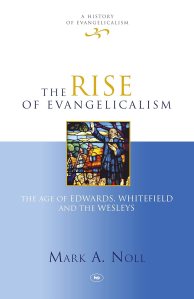
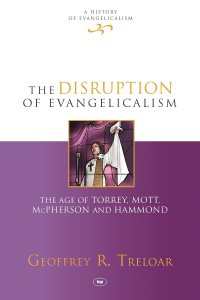
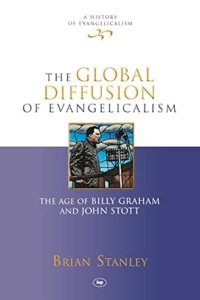
Interested readers might want to know the fuller history of Evangelicalism: its emergence, expansion, prominence, and increasing diversification and fragmentation. A great set of books for this is the “A History of Evangelical” series. This includes five volumes covering the 1730s to the 1990s.


Ten Thousand Denominations?
One feature that stands out from this series is the growing fragmentation of Evangelicalism. It began as a movement among the English, within Church of England (Anglican) congregations, prompted by a common set of spiritual experiences and religious convictions. Today, we see a movement that is multinational and multi-ethnic, encompassing a staggering array of church affiliations and differing convictions about politics and society.
The Common Threads
Despite this diversity, there have been four characteristic features that give coherence to the many varieties of evangelical Christianity. These are:
THE BIBLE

Evangelicals look to the Bible to define how they should live and what they should believe. Our high regard for the Bible comes from our belief that its human authors wrote under the guiding inspiration of God.
As expressed by the Apostle Paul, “All Scripture is breathed out by God and profitable for teaching, for rebuke, for correction, and for training in righteousness” (2 Timothy 3:16). We love the Bible because it is from God and tells us what he is like, what he has done, and how we can live our lives for him.
This high regard contrasts with how other Christian groupings will hold other sources as equally or more important for Christian faith and practice. Key examples include church tradition (e.g. as done by Roman Catholics), spiritual experiences (e.g. Pentecostals), or submitting biblical values to cultural values (e.g. Liberals and Progressives, or syncretistic Christianity in non-western contexts).
Evangelicals don’t necessarily disqualify other sources, but we aim to submit them to the higher authority of the Bible, as God’s own word.
Evangelicals tend to encourage literacy, Bible translation into native languages, and distribution of the Bible. We want people to be able to read the Bible for themselves.
To read more about the nature of the Bible, read “The Bible: What is it?” on the TakeAnotherLook website HERE.
THE CROSS

Evangelicals are Christians who set the death and resurrection of Jesus as central to our faith.
We point to the focus of the four Gospels on the crucifixion of Jesus, and the multifaceted significance of his death that the New Testament letters reveal. The resolution of the Apostle Paul has long been a motto among evangelicals: “I resolved to know nothing while I was with you except Jesus Christ and him crucified” (1 Cor 2:2).
At a personal and spiritual level, it is the reason we are confident of God’s love for us: God has shown his love for the world by giving Jesus for this purpose, and by accepting Jesus’ achievements on the cross we become beneficiaries of it. We are confident of God’s love not because of our own religious performance, nor because we assume he just loves everyone anyway, but because Jesus’ death has made atonement—“reconciliation”—for the things that had estranged us from God.
The evangelical emphasis on the cross distinguishes us from some other churches. For example, some centre their faith around the incarnation (Eastern Orthodox), or spiritual gifts and miracles (Pentecostals), or morality (legalistic churches), or charity and kindness to others. These are valid and vital facets of Christian faith and practice, but these are not the cohesive centre of a distinctively Christian faith—as we would assert is demonstrated by the shape and content of the biblical witness.
Some churches downplay the role of the cross, or have lost their focus on it. This, evangelicals believe, is a serious mistake. The cross reveals God’s love for the world (John 3:16), it reconciles people to God (2 Cor 5:11–21) and to each other (Eph 2:11–22), and models the ethic Christ’s people should live by (1 John 3:16). It has broken the hold of death and evil over humanity (2 Tim 1:10; Col 2:15) and is the beginning of Jesus’ kingship over the world (John 12:23–32).
CONVERSION

Evangelicals typically uphold the necessity of conversion to mark the beginnings of a genuine faith. Being raised in a Christian family or culture is not enough to make a true Christian, nor is mere understanding and agreeing with Christian teaching. There must be a change of life. As Jesus said, “unless one is born again he cannot see the kingdom of God” (John 3:3).
Conversion involves deliberate change.
An old life may need to be left behind—it may be one of worship of a different God, or a commitment to a different cause, or of life habits that didn’t match up with how God expects human beings to live. This “change from” is regularly called “repentance”.
There is also a “change to” something new—that being a belief that Jesus is Lord and Redeemer, and a commitment to a new life that is lived for him. This “change to” can be a long process, even lifelong process. But a definite and willing change of heart in a new direction is a sign of real conversion, and will be evidenced by a changed life.
Many evangelicals will rightly point out how hard such a change is. People are creatures of habit, and the ingrained problem of human sin really makes a real change impossible—unless God is in it. Because of this, they point to the work of God in bringing about changed desires and priorities that make someone “a new creation” (2 Cor 5:17), and as described in many places in the Bible (e.g. John 1:12–13; 2 Cor 4:6; Col 1:13; 1 Thess 1:4–5).
Conversion experiences can look vastly different in different peoples’ stories. It can be immediate or drawn out, difficult or easy, a one-way process or one of stops and starts. People from different ages and stages of life and from many diverse cultures and contexts come to repentance and faith in Jesus. Their stories testify to a change that is the conversion which evangelicals expect to be a normal experience in the creation of a new and genuine Christian.
ACTIVISM:

Despite the insistence that salvation is earned solely by Jesus on the cross, evangelicals have tended to emphasise the importance of good works. Converts to Christ are understood to be called to participate with God in his saving mission in the world. As it is put in Paul’s letter to the church at Ephesus, the purpose of Christian salvation is to live a life of good works, which show us as God’s “workmanship” (Eph 2:10; cf. Titus 2:10).
This activity includes both words and action. While this motivation to action is not unique to evangelicals among Christians, evangelicalism has emphasised the role that every believer has.
The call to action encourages the sharing of the gospel message, both with neighbours and work colleagues as well as with peoples in far-off places. It has also spurred acts of kindness and advocacy for others in need, some of which are small but significant acts done by and for individuals, and some of which can be in larger projects aiming for social change in keeping with the values of the gospel. It also includes helping out with the ministries and activities of churches. Whatever the skills and opportunities of individual and groups of believers, God has saved them to serve—mere church attendance is not what they are called to!
In our own context of New Zealand, evangelical activity has expressed itself in many organizations, including
- Bible Society New Zealand, which is involved in the translation and distribution of Bibles.
- Tear Fund New Zealand, which fundraises and organises social development and relief work in disadvantaged counties.
- Vision West, a West Auckland social support agency.
- Laidlaw College in Henderson, New Zealand’s largest evangelical training college.
- Tertiary Students Christian Fellowship, an organization encouraging spiritual growth and sharing the gospel among university students.
Activism for Christian faith and values is not a unique to evangelicalism, but it is an emphasis that has been characteristic of evangelical churches—an expression of gratitude for salvation and zeal for God.
What Evangelicals Could Do Better
Every movement has its emphases and strengths, but they don’t always live up to their own ideals, and they have their own blind spots. One shortcoming is that we are too easily hitched to individualism that undermines church community and tried-and-tested Christian tradition. Other branches Christianity are less prone to fall into this. Nevertheless, many evangelical churches endeavour to make up for this.
Who We Are
Evangelical Christianity has shown tremendous energy and diversity since its inception 300 years ago. It is not intrinsically an aggressive political movement, even if many evangelicals have an overly politicised faith (pushing too far right or left!). We are Christians who emphasise the Bible as God’s word and Christ crucified as God’s greatest message. We highlight the necessity of conversion as a response to Jesus and urge that his followers must show their commitment to him by their actions.
Would you like to know more?
Leave me a message HERE, or consider reading a little more: Biographies with a Bias: Jesus in the Four Gospels – Take Another Look
Explore






 Take Another Look
Leave a comment