
The objection is sometimes raised that since the Gospels are biased, they cannot be trustworthy sources for discovering the real Jesus of history.
After all—if their stated intention is to persuade you that Jesus is a person of supernatural status and ignored at our own loss, surely we should be at least a little suspicious. Have the Gospel-writers fudged the details to make Jesus fit their agenda?
There are plenty of examples that prompt these kinds of questions:
- Luke’s reference to the census ordered by Caesar Augustus (Luke 2:1–3) does not appear to line up easily with known Roman history.
- Matthew adds an extra donkey to a story, apparently to make it fit a prophetic prediction (compare Matthew 21:1–7 with Mark 11:1–7, Luke 19:29–35, and John 12:12–15).
- All four of the Gospels recount miraculous actions that Jesus allegedly performed. Jesus is said to have walked on water, calmed storms, performed exorcisms, and healed chronically ill or even dead people. And then there is the claim that he rose from the dead after his execution, and ascended up to heaven.
How believable is all this for modern, critical readers?
It is important to know that none of these things are new discoveries. Biblical scholars have long been aware of these kinds of things, and there is a tremendous amount of written discussion on these and other questions.
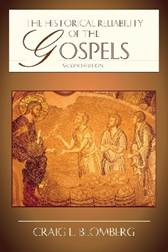
If these questions worry you, a bit of reading will be valuable. One helpful book is Craig Blomberg’s The Historical Reliability of the Gospels. Blomberg is a New Testament Scholar (read about him HERE). His book covers a wide range of topics at an introductory level. Subjects include: the miracle accounts, contradictions between Gospels, sources about Jesus outside the Bible, the kind if literature the Gospels are and how they have been read, and more. The book can be read at the online library http://www.Archive.org with a free login. Click HERE to borrow and read the book through your device.
While most historical difficulties in the Gospels can be resolved without too much challenge, the biggest obstacle for many readers today is the supernatural elements. It is important to recognise that part of the struggle here is due to the “materialist” worldview that most modern people share. We tend not to believe that anything that can’t be explained by natural and physical processes. This needs us to have a shift in mindset to recognise that actors from outside the physical world (e.g. God) sometimes interact with it.
Another factor to keep in mind is that the kind of faith that Christianity is about is more than just knowledge and agreement. The faith that God requires includes trust and commitment as well. Christian faith isn’t simply a case of learning some things about God and agreeing with a set of teachings. It involves humility to receive what God has given, persuasion that Jesus is worth following, and commitment to do what he asks of his followers. Furthermore, the doubts we might carry include a personal element—sometimes the heart must be changed rather than the brain be filled, before resolution is found.
But to return to the main point of this post—there are answers to the doubts and questions that arise from a careful reading of the Gospels. You may not find every question you have answered to 100% satisfaction, but part of that is simply the nature of learning about any topic from the past—we can’t know everything we might want to know. However, the Gospel writers have put on paper everything that they want us to know, so paying attention to that is crucial.
Furthermore, there are ample pointers within the Gospels themselves to their historical trustworthiness. The introduction to Luke’s Gospel indicates he had carefully compiled his account of Jesus’ words and acts. There are many incidental details in all of the Gospels, which suggest that the narratives were relayed from eyewitnesses. And where points of difference do emerge between parallel accounts, these serve to highlight that they did in fact emerge independently rather than by a conspiracy to deceive people.
So—the Gospels can be trusted to tell us about who Jesus is, what he came to do, and what he expects from us. His life, death, and resurrection took place in a real context in history and place. If there are things in the Gospels you want to explore further, I invite you to get in touch for a chat by email, phone, or in a local public location (e.g. the Henderson mall food court).

 Take Another Look
Leave a comment